
Glass
Monitor and control temperature at every stage of glass production, from molten-gob measurement and float-glass cooling to tempering. Quality assured for laminated safety glass.
Case Studies & factoids
Solutions that worked
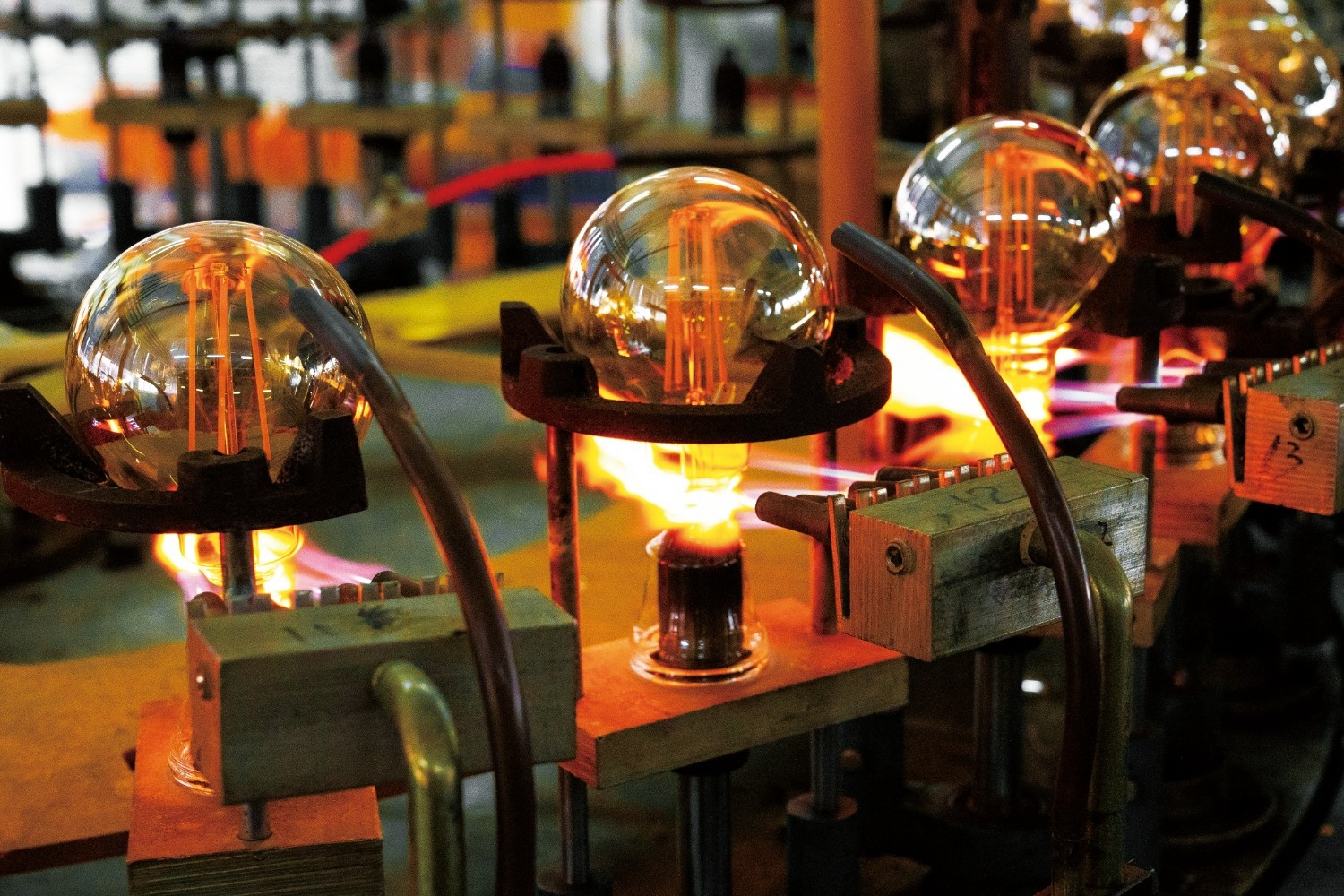
Container Glass
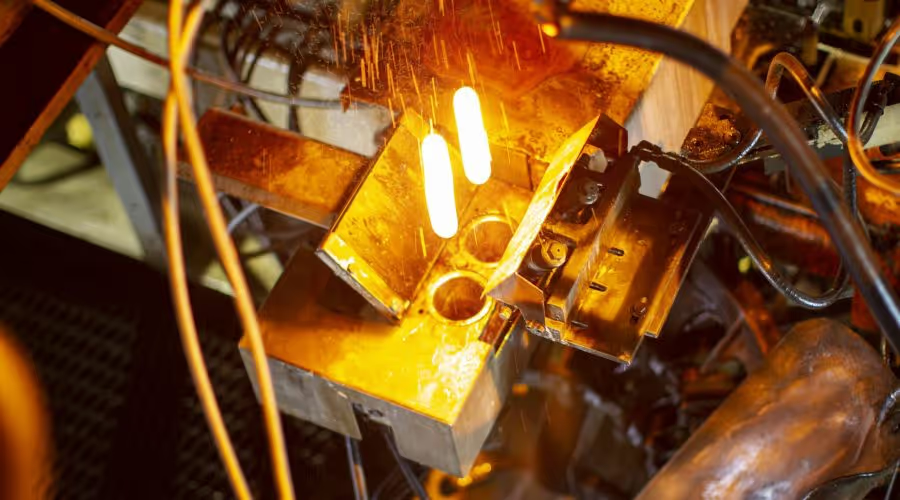
- Molten glass gobs cut at approx. 1000°C; short-wavelength (1 μm) IR thermometers measure core gob temperature
- Optris PI 1M enables simultaneous measurement of multiple gobs in a single image
- The forming process runs above 500°C, and a rapid sensor response is critical
- Temperature is measured directly on the glass surface or indirectly via forming tools during parison shaping and mould finishing
- Post-forming: glass reheated, then gradually cooled in a tunnel for up to 30 minutes; temperature measurement controls the cooling as containers exit the heating zone
Float Glass
- After the tin bath, the glass exits at approx. 60°C; an infrared camera in line-scan mode monitors the transition to the cooling zone
- Infrared cameras installed at multiple points across the cooling sections observe the full process
- Process temperature: 50°C to 600°C

Laminated Safety Glass
- PVB film temperature monitored using infrared thermometers
- Glass panes are preheated to melt the film and press layers together, preventing air pockets
- Temperature distribution monitored during transition to autoclaves
- Measurements used to adjust heating elements in the pre-lamination furnace for subsequent panes
- Process temperature: 50°C to 600°C

Low-E Glass Tempering
- All glass types change emissivity with viewing angle; Low-E coatings require referencing from the uncoated underside
- Top-down system with reference pyrometer underneath for automatic emissivity correction
- Digitally Controlled Lens Protection (DCLP) eliminates additional air purging
- Glass area calculation included
- Pre-assembled for easy retrofit on tempering furnaces
- Automatic, distortion-insensitive scan line adjustment
- Process temperature: 50°C to 600°C
Single-Pane Safety Glass
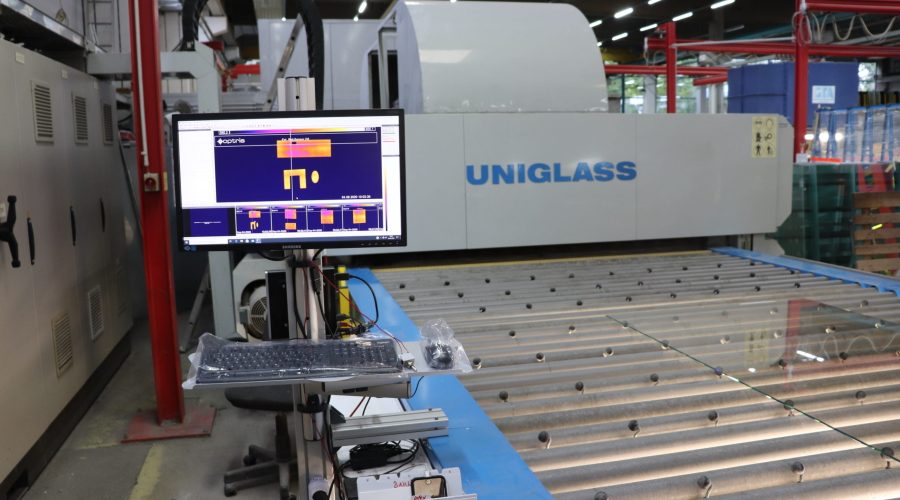
- Flat glass heated above 600°C under continuous movement in a furnace
- Infrared camera monitors temperature distribution on the glass surface in line-scan mode during transport through the pretension zone
- Inhomogeneities compensated during air-cooled tempering
- Final quality depends on homogeneous thermal treatment throughout
- Process temperature: 50°C to 600°C